Project Engineer
Meet the hiring manager for this role. See and hear their expectations for the position.
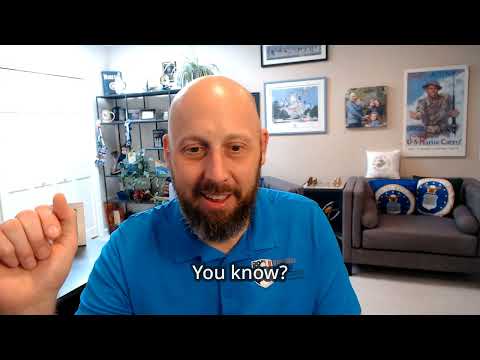
In the first 12 months, own a customer system from solicitation to commissioning. That means going to the customer site to template it, producing the design, understanding the mechanical package well enough to direct the drafter, reading and building out the P&IDs and electrical diagrams, writing or revising the PLC logic, running the in-house fabrication, holding the delivery schedule, and standing there when it comes online.
- Industry
- Manufacturing
- Location
- Dothan, Alabama
- Employment
- Full time
Hear it from the hiring manager
Highlight clips from the larger conversation. The things you actually want to know before applying.
What this role is measured on
-
Own one international processing system end to end within 12 months, from customer solicitation and site templating through design, fabrication, delivery, and commissioning, measured by a system accepted and running at the customer site
-
Take the design load off the engineering lead inside 6 months, measured by the hire independently producing P&IDs, electrical diagrams, and PLC logic for at least one system without the lead in the loop on every revision
-
Verify site readiness before every mobilization, measured by zero commissioning trips that extend beyond schedule because customer-side material, utilities, or interfaces were not in place. This objective exists because it has already gone wrong
-
Get to PLC proficiency within 90 days, through a week-long external course plus applied work on live systems, measured by the hire independently troubleshooting and modifying PLC code on a fielded system
-
Document what has never been documented, measured by every system the hire touches leaving behind current drawings, code backups, and written interface requirements a stranger could follow
-
Solve the cross-campus engineering problems nobody else can close, measured by holistic diagnosis and repair plans delivered for the medical division site, including a first inspection trip that returns with everything needed to fix it in one follow-up visit
Full job description The complete posting, as the client wrote it
Role: Project Engineer
Location: Dothan, Alabama area. Onsite.
Reports to: the hiring manager, engineering lead, former Navy nuclear machinist mate, roughly 13 years with the company
Team: One PhD chemical engineer, one mechanical drafter, and a maintenance group tied closely to engineering
Direct reports: None at hire
Travel: Light. A few days at a time, a handful of times a year. Some international.
Base salary: $70,000 - $85,000
Why it exists: Growth. This is added capacity, not a backfill. Nobody has ever sat in this seat.
The company makes single-use nuclear protective clothing from a water-soluble polymer, then destroys the contaminated garments through a chemical and thermal process that removes the radioactive nuclides and leaves water vapor and air. Domestic plants ship their used garments to Alabama for processing. International plants cannot ship contaminated material across borders affordably, so the company builds and delivers the processing system to them instead. That build is what this role owns.
Why This Role Matters
Here's your baby. Like, I'll teach you everything you need to know about it, and then, uh, it's yours. Like, just build it. I'm here every step of the way to help.
That is the first thing the hiring leader said, before anyone asked him a question. It is also the whole job.
Right now he is the bottleneck. He is doing system design, the P&IDs, the electrical diagrams, the PLC code, the in-house fabrication, the customer site templating, the delivery schedule, and the commissioning trip. When the medical side of the business needs an engineer in the Dominican Republic, that is him too. He said it plainly: "I could really use some help there." The company is growing and the international pipeline is real, with systems going to China and work underway in the UAE. Every month this seat stays empty is a month the design queue moves at one person's speed.
There is no previous person who failed here. There is also no handbook, no defined process, and no runway other than what the hiring leader builds alongside the hire. That is the honest trade: total ownership, in exchange for building the structure yourself.
The Mission
In the first 12 months, own a customer system from solicitation to commissioning.
That means going to the customer site to template it, producing the design, understanding the mechanical package well enough to direct the drafter, reading and building out the P&IDs and electrical diagrams, writing or revising the PLC logic, running the in-house fabrication, holding the delivery schedule, and standing there when it comes online. In his words, this is "somebody that's gonna have his hands in pretty much every one of those pies." Nobody hands you the process. You will be taught the technology and then handed the project.
Performance Objectives
1. Own one international processing system end to end within 12 months, from customer solicitation and site templating through design, fabrication, delivery, and commissioning, measured by a system accepted and running at the customer site.
2. Take the design load off the engineering lead inside 6 months, measured by the hire independently producing P&IDs, electrical diagrams, and PLC logic for at least one system without the lead in the loop on every revision.
3. Verify site readiness before every mobilization, measured by zero commissioning trips that extend beyond schedule because customer-side material, utilities, or interfaces were not in place. This objective exists because it has already gone wrong.
4. Get to PLC proficiency within 90 days, through a week-long external course plus applied work on live systems, measured by the hire independently troubleshooting and modifying PLC code on a fielded system.
5. Document what has never been documented, measured by every system the hire touches leaving behind current drawings, code backups, and written interface requirements a stranger could follow.
6. Solve the cross-campus engineering problems nobody else can close, measured by holistic diagnosis and repair plans delivered for the medical division site, including a first inspection trip that returns with everything needed to fix it in one follow-up visit.
Fit Traits
Owns the project without being managed. Signal: "If they can take on the responsibility, I would give them as much leeway as they could to own the project themselves." He delegates completely and stays available. He does not check in on a schedule. The person in this seat surfaces status without being asked.
Thinks in systems, not in tasks. Signal: "I need somebody that knows how to like act like an engineer, think systems, and then look at the plan holistically and say, 'Hey, this isn't working. Let's solve it.'" He sent people to fix a problem at another campus and they did not get it solved. He is hiring for the diagnostic layer, not the wrench turning.
Crosses lanes without complaint. Signal: "we got our fingers in a lot of pies." Mechanical, electrical, PLC, chemical process, fabrication, commissioning, and travel. A specialist who wants to stay a specialist will resent the breadth.
Teachable in both directions. Signal: "what's even better is that you'll get to teach me some stuff that I don't know too." He is openly critical of his own older PLC work. He hired an outside engineer who had been reverse engineering the company's patented process because the man understood something about the fabric the company did not know. Capability beats credential here, and ego does not survive.
Measures twice, then three more times. Signal: "take a long time, take a lot of good pictures and then we'll go back with the things." There is no hardware store where some of this work happens. Verification before movement is a habit, not a preference.
Who You'll Work For
The hiring manager is a former Navy nuclear machinist mate. Six-year contract, machinist mate in the nuclear program, aboard the Enterprise through her decommissioning. He came straight to this company out of uniform, roughly 13 years ago, knowing nothing about the process, and learned it by building it. He now designs the systems the company ships overseas.
He teaches, then gets out of the way. He is self-deprecating about his own early work, he tells stories instead of giving summaries, and he laughs about the projects that nearly went sideways. He built a fallback plan before rebooting a PLC old enough that it might not have come back online, and when it came back he says they just celebrated. He moved his family away from Dothan once after COVID and then moved back, because he liked it here.
I'll teach you everything you need to know about it, and then it's yours.
Why Veterans Succeed Here
If you came out of the Navy nuclear pipeline, you have already done a version of this job. You read prints as a first language. You understand contamination control, chain of custody, and why the paperwork is not bureaucracy. You have stood a watch where the system in front of you was older than your enlistment and the answer was not in the manual. The hiring leader walked the same path: machinist mate, nuclear program, Enterprise, then straight into this company with no industry experience and no handholding. He is not guessing about whether a veteran can do this. He did it.
The work rewards deployment habits directly. There is no hardware store at some of these sites. He said it about the Dominican Republic campus: if you need a part, it is not a trip across town. So you inspect first, you take a long time and a lot of good pictures, and you come back with everything. That is a detachment mindset, not a corporate one. The same is true of the 2014 commissioning trip where he arrived to find nothing prepped and no material ordered, and stayed weeks to build it anyway. Adapt, finish the mission, then change the process so it does not happen again.
VHS matched this role because the performance objectives, the leadership style, and the tempo align with transitioning Navy nuclear operators, hull and machinery technicians, Seabees, Marine engineer equipment and utilities Marines, and Air Force and Army maintenance technicians who have owned an end to end build or overhaul. The technical ceiling here is high and the credential floor is low. That combination is rare, and it favors the veteran who was never given the degree but was given the plant.
Requirements
Minimum qualifications only. The hiring leader named no hard disqualifier for a candidate with a technical background: "I don't think there's anything that's gonna say, 'Oh, no, I need this from you.' Because you're obviously trainable. You're obviously smart enough to do the job."
Reads and produces mechanical drawings, P&IDs, and electrical diagrams. Military equivalent: Navy nuclear MM, EM, EN, ELT, and MR ratings working from system prints and EOSS. Air Force 2A and 3E technicians. Army 91 series and 12 series. Maps to Objectives 1 and 2.
Understands PLC logic, or is trainable inside 90 days. External training is provided and expected. Military equivalent: fire control technicians, IC and ET ratings, Marine 1142 and 1141, Air Force 2M0 and 3E1, any ICS or automated plant control background. Maps to Objective 4.
Hands-on fabrication and construction oversight. Military equivalent: hull technicians, machinist mates, Seabees in the CE, CM, and SW ratings, Marine 1161 and 1345, Army 91 series shop work. Maps to Objectives 1 and 6.
Has owned a project or evolution end to end, including schedule and outside parties. Military equivalent: LPO, work center supervisor, maintenance division officer, ship's force during a yard availability, platoon or company grade leadership on a build or overhaul. Maps to Objectives 1 and 3.
Systems level troubleshooting with incomplete information and no supply chain. Military equivalent: any deployed maintenance role, nuclear watchstanding, casualty control, detachment or FOB level repair. Maps to Objectives 3 and 6.
Willing to travel a few days at a time, some international. Valid passport or able to obtain one. Military equivalent: deployments, port visits, overseas detachments. Maps to Objectives 1 and 6.
Chemical or process exposure is a plus, not a requirement. Military equivalent: nuclear ELT, primary and secondary water chemistry, CBRN specialists. Maps to Objective 1.
Willing to live in the Dothan, Alabama area.
*Must have served in the U.S. Army, U.S. Navy, U.S. Marine Corps, U.S. Air Force, U.S. Coast Guard, U.S. Space Force, U.S. Reserves, or U.S. National Guard.
Benefits
- Medical, Dental, Vision, 401K, PTO